

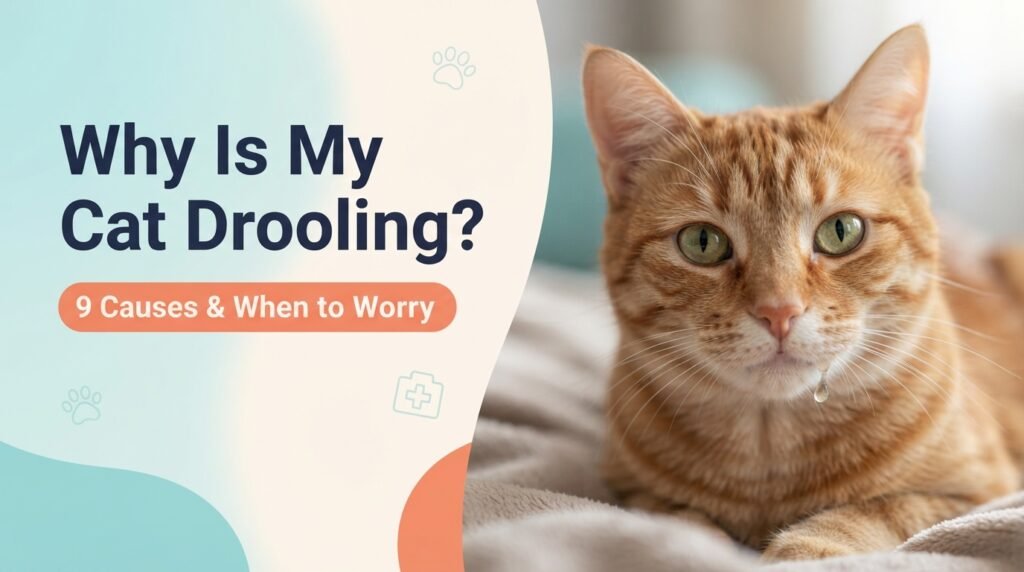
Have you ever noticed your cat leaving a little wet spot on your clothes while cuddling or relaxing? Although it might look unusual, some cats naturally drool when they feel comfortable and happy.
However, cat drooling isn’t always harmless. If your cat suddenly starts drooling excessively, produces thick saliva, or has difficulty eating, it could indicate an underlying health problem.
So, why is your cat drooling?
Cats may drool because of relaxation, dental disease, mouth injuries, nausea, kidney disease, poisoning, or other medical conditions. The important thing is to recognize whether the drooling is part of your cat’s normal behavior or a new symptom that needs veterinary attention.
In this guide, we’ll explain nine possible causes of cat drooling, what different symptoms may indicate, and when you should contact a veterinarian.
Is It Normal for Cats to Drool?
Yes, some cats drool occasionally, particularly when they’re relaxed, purring, kneading a blanket, or receiving affection from their owners.
A small amount of saliva during these situations usually isn’t concerning, especially if your cat has always behaved this way and appears healthy.
However, cats generally don’t drool as frequently as dogs. Excessive, persistent, or sudden drooling should not be ignored.
Veterinarians call excessive saliva production ptyalism. It can happen when a cat produces too much saliva or cannot swallow saliva normally.
According to the MSD Veterinary Manual, both problems can result in excessive drooling.
The difference matters:
- Normal drooling: A small amount of saliva during familiar relaxing situations.
- Potentially abnormal drooling: New, continuous, excessive, bloody, or foul-smelling saliva, especially with other symptoms.
If your cat suddenly starts drooling without an obvious explanation, arrange a veterinary assessment.
9 Reasons Why Your Cat Is Drooling
There are several possible explanations for excessive drooling in cats. Some are relatively harmless, while others require veterinary treatment.
Let’s examine the most common causes.
1. Relaxation, Purring, or Happiness

Have you noticed your cat drooling while you pet them?
Some cats release small amounts of saliva when they’re comfortable, relaxed, and enjoying attention.
You may notice this behavior when your cat:
- Purrs while sitting on your lap.
- Kneads a soft blanket.
- Falls asleep beside you.
- Receives gentle head scratches.
- Enjoys being cuddled.
The exact reason some cats drool during these situations isn’t fully established. Relaxation-related behavior and physiological responses have been proposed as explanations.
If your cat only drools during these familiar situations and otherwise eats, drinks, grooms, and behaves normally, it’s generally less concerning.
However, don’t automatically assume that new drooling is caused by happiness.
When to worry: If your cat starts drooling outside these familiar situations, produces large amounts of saliva, or develops other symptoms, contact your veterinarian.
2. Dental Disease and Tooth Pain

Dental problems are among the important medical causes of drooling in cats.
Conditions such as gingivitis, periodontal disease, and tooth resorption can cause inflammation and significant discomfort inside your cat’s mouth.
When a cat experiences oral pain, swallowing normally may become difficult, allowing saliva to accumulate and escape from the mouth.
Other signs of dental disease include:
- Bad breath.
- Red or swollen gums.
- Drooling while eating.
- Dropping food from the mouth.
- Chewing on one side.
- Pawing at the mouth.
- Avoiding dry food.
- Reduced appetite.
One condition worth knowing about is tooth resorption. It causes the structure of a tooth to break down and can be extremely painful.
According to Cornell University’s College of Veterinary Medicine, affected cats may drool, become reluctant to eat, or turn their heads while chewing.
Dental disease often requires a professional examination, dental X-rays, cleaning, or other treatment depending on its severity.
Don’t try to examine painful teeth forcefully at home.
3. Mouth Ulcers and Stomatitis

Mouth ulcers and inflammation can make eating and swallowing extremely uncomfortable for cats.
One important condition is feline gingivostomatitis, an inflammatory disease that affects the gums and other tissues inside the mouth.
Cats with this condition may develop:
- Excessive drooling.
- Blood in their saliva.
- Severe bad breath.
- Red or swollen gums.
- Difficulty swallowing.
- Reduced appetite.
- Pawing at their mouths.
- Weight loss.
Some cats may approach their food bowl because they’re hungry but then walk away because eating hurts.
Cornell University identifies excessive salivation, oral pain, bleeding gums, and difficulty eating among the clinical signs of feline gingivostomatitis.
If your cat has these symptoms, arrange a veterinary examination promptly.
4. Nausea and Digestive Problems
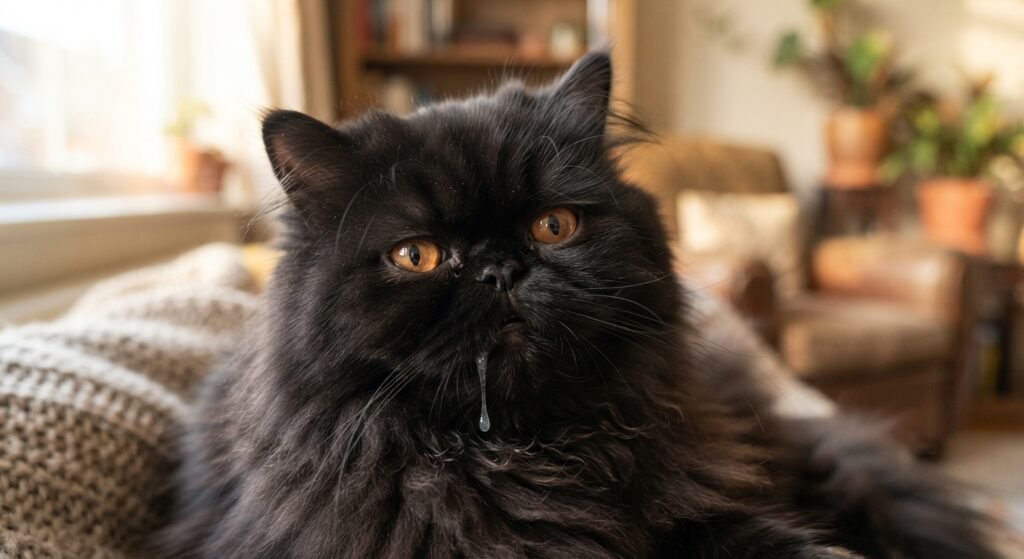
Did you know that nausea can cause excessive drooling in cats?
When cats feel sick, their bodies may produce additional saliva. They may also repeatedly lick their lips or swallow.
Possible causes of nausea include:
- Gastrointestinal inflammation.
- Hairballs.
- Dietary changes.
- Motion sickness.
- Certain medications.
- Other underlying illnesses.
You might notice drooling alongside:
- Lip licking.
- Repeated swallowing.
- Vomiting.
- Reduced appetite.
- Hiding or unusual behavior.
If your cat is drooling and vomiting repeatedly, contact a veterinarian promptly.
Persistent vomiting, weakness, blood in vomit, or significant appetite changes deserve particular attention.
5. Kidney Disease
Can kidney failure in cats cause drooling?
Yes, kidney disease can contribute to drooling, particularly in cats with advanced disease.
Healthy kidneys help remove waste products from the bloodstream. When kidney function declines, waste products can accumulate and make a cat feel unwell.
Cats with kidney disease may also experience nausea, appetite loss, dehydration, and oral problems.
Some cats develop painful mouth ulcers, which can contribute to excessive saliva production.
Other possible signs of chronic kidney disease include:
- Drinking more water than usual.
- Urinating more frequently.
- Weight loss.
- Reduced appetite.
- Vomiting.
- Lethargy.
- Poor coat condition.
According to Cornell University’s Feline Health Center, chronic kidney disease is particularly common in older cats and may initially cause few noticeable symptoms.
Important: Drooling does not automatically mean your cat has kidney failure. A veterinarian may recommend blood tests and a urinalysis to evaluate kidney function.
6. Poisoning or Exposure to Toxic Substances
Common Emergencies in Cats: Emergency Care

Sudden excessive drooling can sometimes indicate exposure to a poisonous substance.
Cats are curious animals. They may investigate household products, chew plants, or accidentally come into contact with medications and chemicals.
Potential hazards include:
- Toxic plants.
- Household cleaning products.
- Certain insecticides.
- Human medications.
- Some essential oil products.
- Antifreeze and other chemicals.
Depending on the substance, poisoning may cause excessive saliva production, mouth irritation, vomiting, breathing difficulties, tremors, or seizures.
Emergency warning: If you suspect your cat has contacted or swallowed something poisonous, contact a veterinarian or emergency veterinary hospital immediately. Do not wait for additional symptoms.
In the United States, you can also contact the ASPCA Animal Poison Control Center:
ASPCA Animal Poison Control Center
888-426-4435
Available 24 hours a day, 365 days a year. A consultation fee may apply.
Official ASPCA Poison Control information
Never try to make your cat vomit or give home remedies unless a veterinary professional specifically instructs you to do so.
Cornell University’s Feline Health Center also identifies drooling, heavy breathing, vomiting, and seizures as possible signs of poisoning. Cornell Vet College+1
7. Stress, Fear, or Anxiety
How to calm a cat during periods of high anxiety | PetsRadar
Stress can sometimes cause cats to drool.
For example, you may notice excessive saliva when your cat experiences:
- A car journey.
- A veterinary visit.
- Loud noises.
- An unfamiliar environment.
- Contact with unfamiliar animals.
- Sudden household changes.
Some cats also experience motion sickness during travel, which can cause nausea and drooling.
Stress-related drooling may disappear after the stressful situation ends.
However, persistent drooling should not automatically be blamed on anxiety. If the behavior is new or recurring, discuss it with your veterinarian.
8. Foreign Objects or Mouth Injuries

Sometimes, excessive drooling happens because something is irritating or obstructing your cat’s mouth.
Possible causes include:
- A small object stuck between the teeth.
- A foreign object under the tongue.
- Mouth injuries.
- Tongue injuries.
- Burns or irritation.
- Jaw trauma.
You might notice your cat repeatedly pawing at its mouth, shaking its head, refusing food, or struggling to swallow.
A particularly important warning involves string, thread, and similar materials.
If you see string coming from your cat’s mouth, never pull it out. It could be caught further down the digestive tract and pulling it may cause serious injury. Seek veterinary care immediately.
If you suspect a foreign object or mouth injury, don’t force your cat’s mouth open. Let a veterinarian examine it.
9. Respiratory Infections and Other Medical Conditions

Certain infections can cause inflammation and painful sores inside a cat’s mouth.
For example, feline calicivirus can cause oral ulcers, which may lead to excessive salivation.
You may also notice:
- Sneezing.
- Nasal discharge.
- Watery eyes.
- Mouth ulcers.
- Reduced appetite.
- Lethargy.
Other less common causes of drooling include oral tumors, neurological problems, and conditions that interfere with normal swallowing.
If drooling is accompanied by difficulty breathing, severe weakness, or other serious symptoms, seek emergency veterinary care.
What Does Your Cat’s Drooling Tell You?
The amount, timing, and appearance of saliva can provide useful clues. However, these observations cannot confirm a diagnosis.
Here’s how to interpret some common situations.
| What you notice | Possible explanation |
|---|---|
| Drooling while purring | Relaxation or an underlying mouth problem |
| Drooling while sleeping | Relaxation or oral disease |
| Drooling but acting normal | Mild behavioral drooling or an early health problem |
| Drooling and not eating | Dental pain, mouth ulcers, nausea |
| Thick or sticky saliva | Dehydration, nausea, or difficulty swallowing |
| Drooling but still eating | Dental disease or another oral problem |
| Sudden excessive drooling | Toxin exposure, injury, nausea, or oral irritation |
Cat Drooling Excessively but Acting Normal
This situation can be confusing for pet owners.
Your cat may be eating, playing, sleeping, and behaving normally while producing more saliva than usual.
Should you be concerned?
Yes, if the drooling is new, unexplained, persistent, or increasing.
Cats sometimes hide discomfort, so normal behavior does not completely rule out dental disease or another underlying condition.
Observe when the drooling happens and arrange a veterinary examination if it continues or represents a change from your cat’s usual behavior.
Cat Drooling and Not Eating
Drooling combined with a reduced appetite is more concerning than occasional drooling alone.
Possible explanations include:
- Tooth pain.
- Gingivitis.
- Mouth ulcers.
- Stomatitis.
- Nausea.
- Difficulty swallowing.
Pay attention to whether your cat approaches food but refuses to eat, drops food, chews unusually, or avoids hard food.
Contact your veterinarian promptly, particularly if your cat stops eating. Don’t wait several days to see whether the problem resolves.
Why Is My Cat Drooling Thick Saliva?
Thick, sticky saliva may occur when a cat is dehydrated or experiencing nausea or irritation inside the mouth.
It can also occur when a cat has difficulty swallowing normally.
Look for additional symptoms such as:
- Dry or tacky gums.
- Vomiting.
- Reduced water intake.
- Difficulty swallowing.
- Lethargy.
- Poor appetite.
Thick saliva alone cannot identify the cause. A veterinarian can determine whether the problem involves dehydration, oral disease, or another condition.
Cat Drooling a Lot but Eating
Eating normally is reassuring, but it doesn’t completely rule out a medical problem.
Some cats continue eating despite dental discomfort or early oral disease.
Watch for changes in chewing, food preferences, bad breath, and pawing at the mouth.
If the drooling is new or persistent, schedule a veterinary examination.
Cat Drooling Excessively Suddenly
Sudden drooling deserves particular attention.
Possible causes include:
- Contact with a toxic substance.
- Mouth injury.
- A foreign object.
- Severe nausea.
- Oral irritation.
- Heat-related illness.
If the drooling is heavy or accompanied by breathing difficulties, tremors, vomiting, collapse, or suspected poisoning, go to an emergency veterinarian.
When Should You Worry About Cat Drooling?
Not every drooling episode requires an emergency visit. However, certain symptoms should never be ignored.
Seek emergency veterinary care
Contact an emergency veterinarian immediately if your cat has:
- Suspected poisoning or exposure to toxic chemicals.
- Difficulty breathing or severe panting.
- Seizures, tremors, or collapse.
- Heavy drooling with severe weakness.
- Suspected throat obstruction or a swallowed foreign object.
- Severe mouth injury or uncontrolled bleeding.Arrange a veterinary appointment promptlyContact your regular veterinarian if your cat has:
- New or persistent drooling.
- Bad breath.
- Red or swollen gums.
- Reduced appetite.
- Difficulty chewing.
- Repeated vomiting.
- Weight loss or changes in behavior.
When in doubt, call your veterinarian and describe the symptoms. They can help determine how quickly your cat needs to be examined.
What Should You Do If Your Cat Starts Drooling?
If you notice your cat drooling unexpectedly, follow these steps.
1. Observe your cat’s behavior.
Check whether your cat is eating, drinking, walking, grooming, and behaving normally.
2. Look for additional symptoms.
Notice any vomiting, bad breath, mouth bleeding, pawing at the mouth, or difficulty swallowing.
3. Consider possible exposure to toxins.
Think about whether your cat could have accessed cleaning products, medications, plants, or chemicals.
If exposure is possible, contact a veterinary professional immediately.
4. Take a picture or video.
A short video of the drooling can help your veterinarian understand what you’re observing.
5. Arrange veterinary care.
If drooling is new, persistent, or unexplained, arrange an examination. If emergency warning signs are present, don’t delay.
6. Avoid home treatments.
Never give human medications, essential oils, or unverified remedies to stop drooling. These may make the situation worse.
How Do Veterinarians Diagnose Excessive Drooling?
A veterinarian will first investigate the possible cause of your cat’s excessive salivation.
Depending on the symptoms and examination findings, the diagnostic process may include:
- Medical history: Questions about when drooling started, eating habits, medications, and possible toxin exposure.
- Physical examination: Checking your cat’s general health and looking for signs of illness or injury.
- Oral examination: Checking the teeth, gums, tongue, and other tissues inside the mouth.
- Blood tests: Evaluating organ function and looking for signs of underlying disease.
- Urinalysis: Assessing urine concentration and other indicators of kidney or urinary problems.
- Dental imaging: Dental X-rays may be needed to identify problems below the gumline.
- Additional testing: Imaging or tissue sampling may be recommended if a tumor, foreign object, or another condition is suspected.
The tests depend on the individual cat. Not every cat needs every diagnostic procedure.
Treatment also depends on the underlying cause. For example, dental disease may require professional dental treatment, while poisoning requires prompt, substance-specific veterinary care.
7. Frequently Asked Questions About Cat Drooling
Should I be worried if my cat is drooling?
It depends on the situation. A small amount of drooling during purring or relaxation may be normal. However, sudden, excessive, persistent, or unexplained drooling can indicate dental disease, nausea, poisoning, or another health problem. Contact your veterinarian if you notice a change.
Do cats drool if they are sick?
Yes. Sick cats may drool because of nausea, mouth pain, oral ulcers, infections, or other medical conditions. Drooling alongside vomiting, appetite loss, lethargy, or unusual behavior deserves veterinary attention.
Why is my cat drooling very badly?
Heavy drooling can occur because of severe dental disease, mouth injuries, nausea, poisoning, or difficulty swallowing. If the drooling starts suddenly or comes with breathing problems, weakness, vomiting, or suspected toxin exposure, seek emergency veterinary care.
Does kidney failure in cats cause drooling?
Yes, kidney disease can contribute to excessive drooling. Advanced kidney disease may cause nausea and painful oral ulcers, both of which can increase salivation. However, drooling alone cannot diagnose kidney failure. Blood tests and urinalysis help veterinarians evaluate kidney function.
Why is my cat drooling when I pet them?
Some cats drool when they’re comfortable and enjoying affection. This behavior is generally harmless when it happens occasionally during familiar relaxing situations and your cat has no other symptoms.
Why is my cat drooling while sleeping?
Some cats release a little saliva while sleeping because they’re deeply relaxed. If this is an established behavior and your cat is otherwise healthy, it is usually less concerning. New or excessive drooling during sleep deserves veterinary attention.
Is cat drooling before death a sign that my cat is dying?
Drooling can occur in seriously ill cats, but it is not a reliable sign that death is approaching.
A seriously ill cat may also experience weakness, appetite loss, breathing changes, reduced mobility, or other symptoms. These signs require veterinary assessment.
If your cat is nearing the end of life, your veterinarian can evaluate its comfort, prognosis, and available palliative care options.
Never assume that a cat is dying based on drooling alone.
Can a cat drool excessively but still eat normally?
Yes. Some cats continue eating despite dental discomfort or early oral disease. If the drooling is new, persistent, or unusual, arrange a veterinary examination even if your cat still eats normally.
8. Final Thoughts
Cat drooling can be completely harmless in certain situations, particularly when your cat is relaxed, purring, or enjoying attention.
However, excessive or sudden drooling should never be ignored.
Dental disease, mouth ulcers, nausea, kidney disease, poisoning, and injuries are among the possible medical causes.
Pay attention to changes in your cat’s saliva, appetite, eating habits, and overall behavior. If drooling is new, persistent, or accompanied by other symptoms, contact your veterinarian.
Most importantly, don’t try to diagnose the problem or treat it with home remedies. A proper veterinary examination is the safest way to identify the cause and get your cat appropriate care.
Veterinary disclaimer: This article is intended for educational purposes only. It does not replace professional veterinary diagnosis, advice, or treatment. If your cat is experiencing sudden or excessive drooling, contact a licensed veterinarian. Seek emergency veterinary care if you suspect poisoning or notice serious symptoms.