Can Dogs Eat Seafood? Benefits, Risks & Safe Seafood List
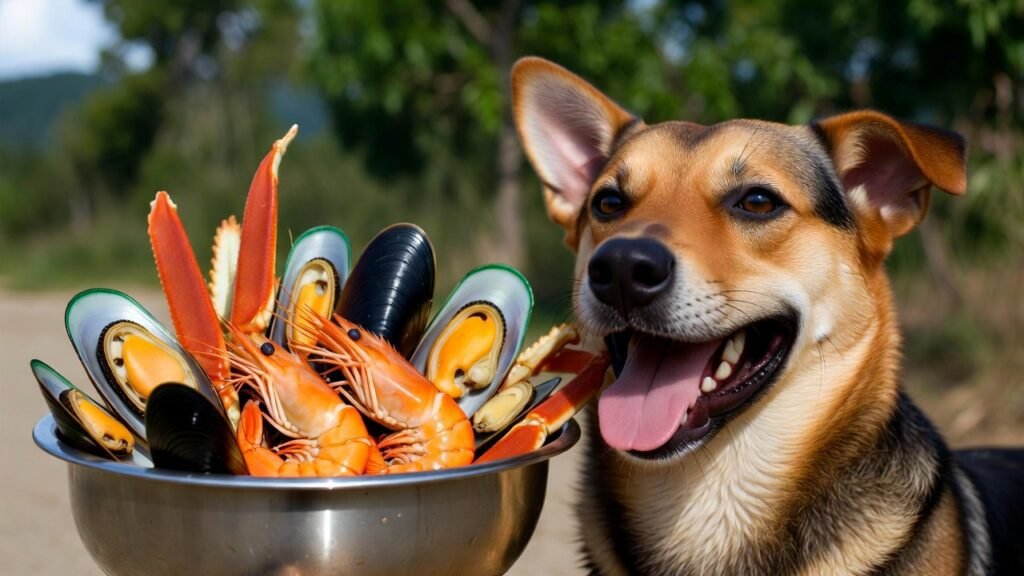
Can dogs eat seafood? Many dog owners wonder if fish, shrimp, or other seafood are safe for their pets. Seafood can provide dog-friendly nutrition, packed with protein and omega-3 fatty acids, but not all types are safe. Some seafood contains mercury or bones that can harm your dog. In this guide, we’ll explore safe fish for dogs, dangerous seafood to avoid, the benefits, risks, and how to feed seafood properly so your dog stays healthy and happy.
7 Safe Seafood Options Dogs Can Eat to Boost Health
Seafood can be a healthy addition to your dog’s diet when prepared properly. Here are seven safe types you can feed:
- Salmon – Packed with omega-3s and protein. Always cook thoroughly and remove bones.
- Sardines – Small, low in mercury, great for small dogs. Choose canned in water.
- Mackerel – Rich in healthy fats, feed in moderation.
- Herring – A lean fish full of omega-3s.
- Whitefish (Cod, Haddock, Pollock) – Easily digestible, high in protein.
- Shrimp – Fully cooked, peeled, and served occasionally.
“Shrimp is a popular seafood choice for dogs. For a detailed guide on feeding shrimp safely, check out our Can Dogs Eat Shrimp article.”
- Crab or Lobster – Cooked and unsalted, safe in small portions.
3 Dangerous Seafood Types Dogs Must Never Eat
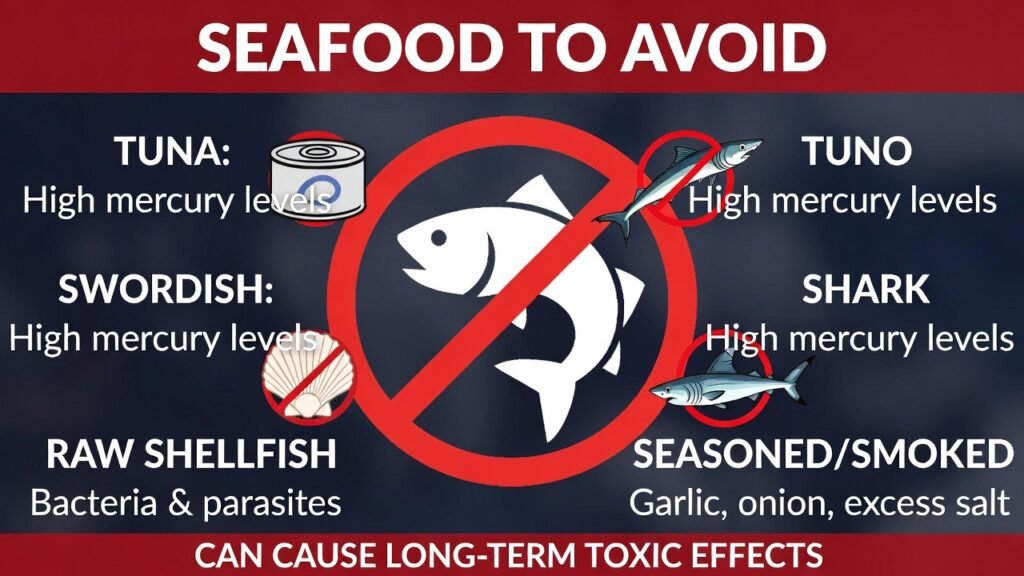
Not all seafood is safe. Feeding your dog the wrong types can cause serious health problems. Avoid:
- Tuna, Swordfish, Shark – High in mercury, toxic long-term.
- Raw Shellfish – Risk of bacteria and parasites.
- Seasoned or Smoked Fish – Garlic, onion, or excess salt can be toxic.
5 Key Benefits of Seafood for Dogs
Feeding the right seafood provides multiple health benefits:
- Boosts Skin & Coat Health – Omega-3s reduce dryness and itching.
- Supports Brain & Heart Function – Fatty acids improve cognitive function.
- High-Quality Protein – Essential for muscle growth and energy.
- Low in Calories – Helps maintain a healthy weight.
- Packed with Vitamins & Minerals – Supports immune system and metabolism.
Learn more about safe fish choices for dogs on PetMD
How to Feed Seafood to Dogs Safely?
Follow these simple steps:
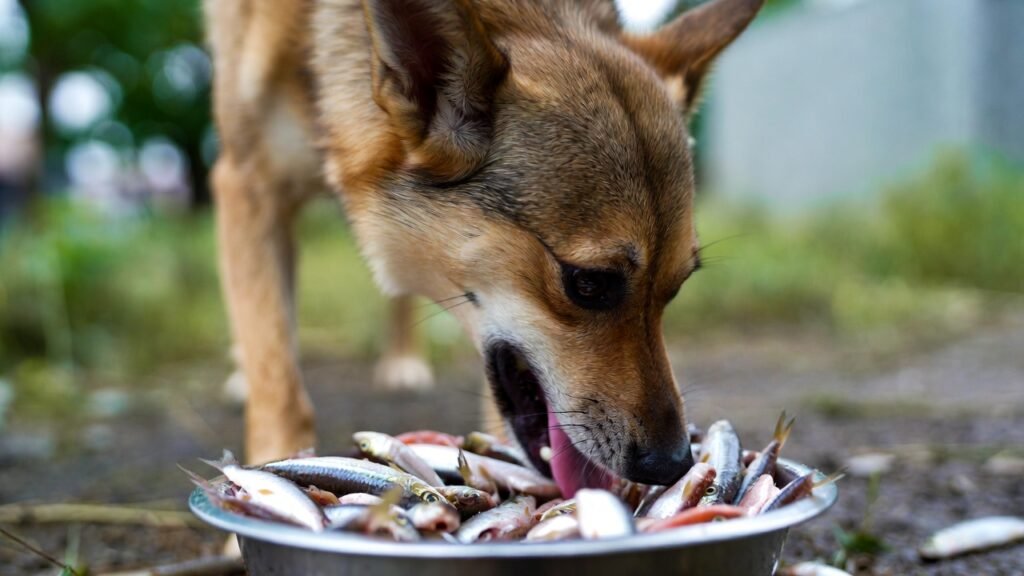
- Cook all seafood thoroughly.
- Remove bones and shells to prevent choking.
- Serve in moderation – seafood should be a supplement, not the main meal.
- Observe for allergies – watch for itching, vomiting, or diarrhea.
- Avoid sauces and seasonings – keep it plain.
Introduce seafood gradually to avoid allergies or digestive issues (ASPCA).
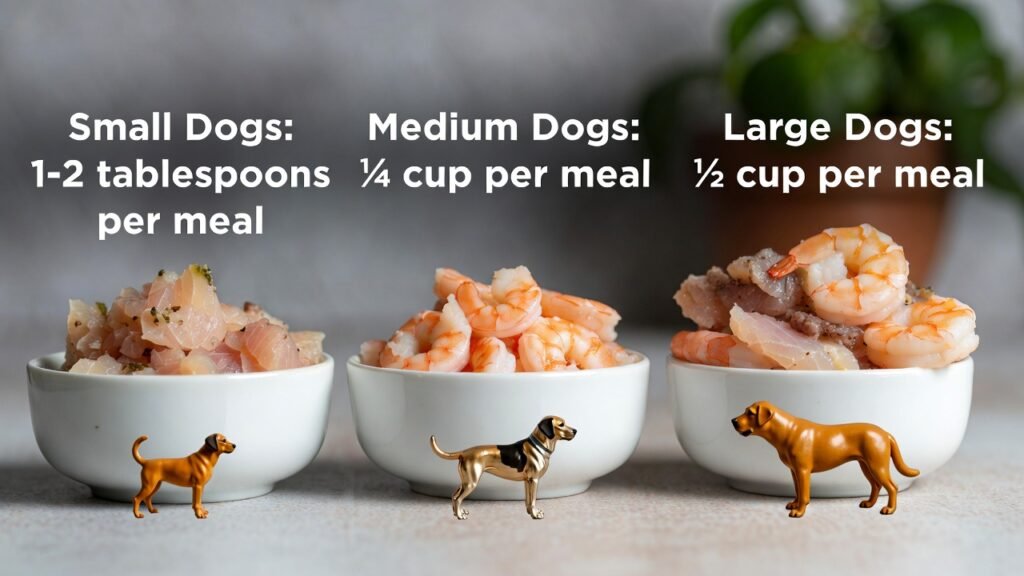
Recommended Portion Sizes for Dogs
- Small dogs: 1–2 tablespoons per meal
- Medium dogs: ¼ cup per meal
- Large dogs: ½ cup per meal
Cooking vs. Raw Seafood for Dogs
- Cooked: Safer, kills bacteria and parasites, softens bones.
- Raw: Risky unless specially prepared for dogs. Most dog owners should avoid raw seafood.

Allergies and Sensitivities
Dogs can be allergic to seafood. Watch for:
- Itchy skin or ears
- Vomiting or diarrhea
- Swelling around face or paws
- Excessive scratching
If you notice any signs, stop feeding seafood immediately and consult your vet.
How to Prepare Dogs Seafood Safely
This video shows:
- How to prepare safe seafood
- Best fish to feed your dog
FAQs About Dogs and Seafood (with Answers)
Yes — dogs can eat some types of seafood when it’s cooked, boneless, and plain (no seasoning or oils). Safe fish include salmon, cod, and sardines. Shellfish like shrimp and crab are also okay if fully cooked and peeled. Always remove bones and shells to avoid choking or internal injury.
No — raw seafood (fish or shellfish) can contain harmful bacteria and parasites that may make dogs sick. This includes risks like parasite infections and foodborne bacteria. Cooking helps kill these pathogens and makes it safer.
Dogs should avoid:
High‑mercury fish like swordfish, shark, and some tuna
Raw fish or shellfish
Smoked, salted, or heavily seasoned seafood
Fish bones and shells that can choke or cause injury.
Yes — but only if shrimp is fully cooked, peeled, and deveined. Raw or undercooked shrimp can cause food poisoning. Also avoid shrimp with shells or tails, as these are choking hazards.
Some tuna (especially albacore) has high mercury levels, so it’s not ideal to feed regularly. Light tuna in water can be offered as an occasional treat, but it shouldn’t be a staple of your dog’s diet.
Seafood should be an occasional supplement, not a main diet. Most dogs can have seafood 1–2 times per week as a treat, provided it’s prepared safely and part of a balanced diet.
Yes, puppies and pregnant dogs can eat seafood that’s properly cooked and deboned — but always talk to your veterinarian first to make sure it fits your pup’s growth needs and health history.
Fish is often used as a novel protein in diets for dogs with food allergies or sensitivities. Omega‑3 fatty acids from safe fish like salmon can support skin and coat health, and may help reduce inflammation.
Yes — fish bones are sharp and brittle and can choke your dog or puncture their digestive tract. Always remove every bone before offering seafood.
Monitor for symptoms such as vomiting, diarrhea, lethargy, or abdominal pain. If symptoms occur or you’re unsure what they ate, contact your vet right away — especially if the fish was raw or potentially contaminated.
Conclusion
Seafood can be a healthy and tasty addition to your dog’s diet — as long as you know which types are safe, how to prepare them, and how much to serve. Safe options like salmon, sardines, and mackerel provide high-quality protein, omega-3 fatty acids, and essential vitamins that support your dog’s skin, coat, heart, and brain health. At the same time, it’s important to avoid high-mercury fish, raw shellfish, and seasoned or smoked seafood.
Feeding seafood in moderation, observing your dog for allergies, and preparing it safely ensures your pet enjoys the benefits without any risks.
Now we’d love to hear from you! 🐾
- Have you ever fed your dog seafood?
- Which types does your dog love the most?
- Have you noticed any benefits or reactions?
Share your experience in the comments below — your story might help other pet owners make safer, healthier choices for their dogs! And don’t forget to share this guide with fellow dog lovers who want to give their pets the best nutrition possible.