
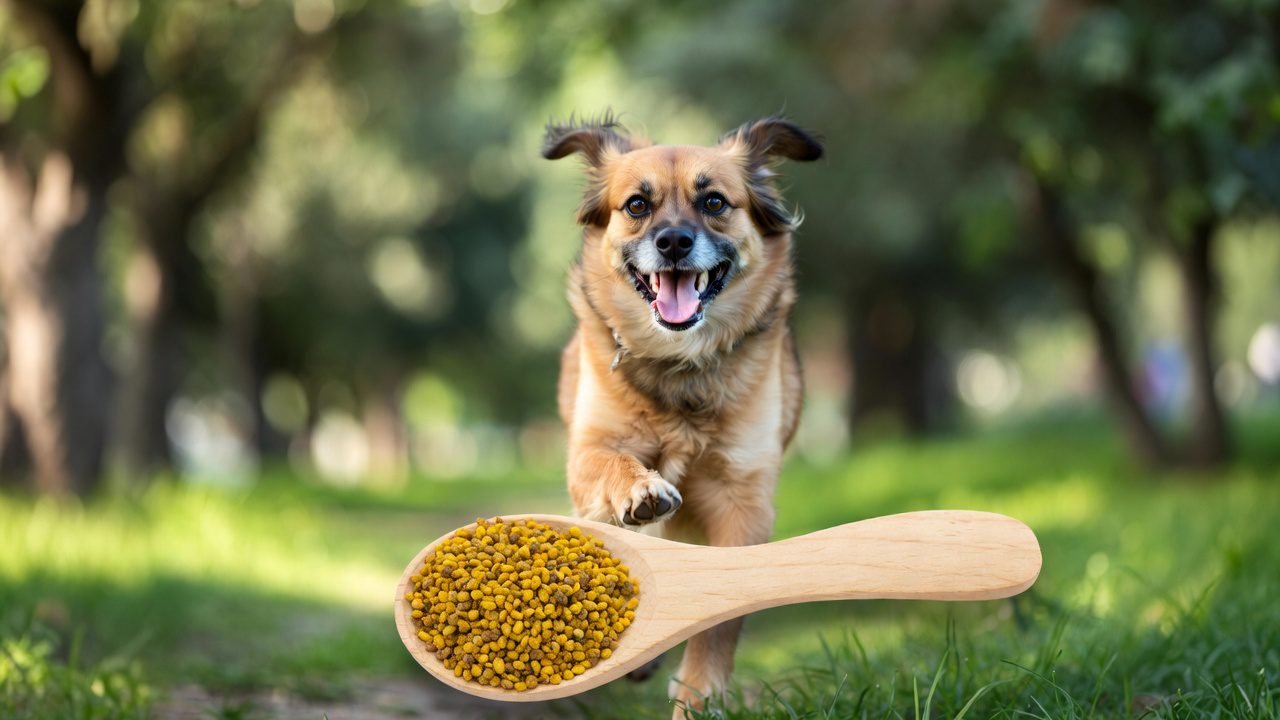
Many dog owners today are looking for natural supplements to improve their pet’s health. One popular option is bee pollen for dogs. You may have seen people talking about it for allergies, energy, skin health, and immune support. But many pet parents still ask important questions:
- Is bee pollen safe for dogs?
- Can dogs eat bee pollen daily?
- What are the real benefits?
- What is the correct dosage?
- Are there any side effects?
In this guide, you’ll learn the benefits, safety, dosage, and possible side effects of bee pollen for dogs.The goal is to help you make a safe and smart decision for your dog.
Quick Answer: Is Bee Pollen Good for Dogs?
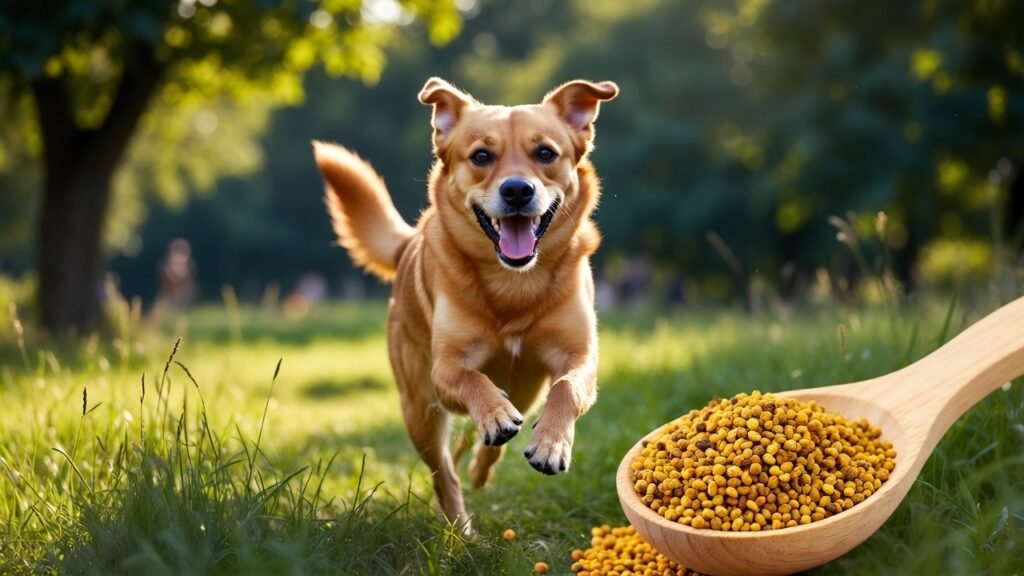
Yes, bee pollen can be good for dogs when used in small amounts and with veterinary guidance. It may help support:
- Immune system health
- Skin and coat condition
- Seasonal allergies
- Energy levels
- Digestion
However, not all dogs react the same. Some dogs may have allergic reactions or stomach issues. Always start with a very small amount.
What Is Bee Pollen?
Bee pollen is a natural substance collected by bees from flowers. It contains:
- Vitamins (A, B, C, D, E)
- Minerals
- Amino acids
- Antioxidants
- Enzymes
- Natural proteins
Because of its rich nutrition, some people call it a “superfood.” Many natural pet health communities recommend raw or organic bee pollen for dogs as a supplement.
Benefits for Dogs:
1. Supports Dog Allergies
Many owners use bee pollen for dog allergies. Some believe local pollen may help dogs adjust to seasonal allergens.
Possible benefits:
- Reduced itching
- Less skin irritation
- Improved immune response
Note: Scientific evidence is still limited. Results vary between dogs.
2. Improves Skin and Coat Health
Bee pollen contains nutrients that may help:
- Dry skin
- Dull coat
- Minor skin problems
Omega nutrients and antioxidants support healthy skin cells.
3. Boosts Energy Levels
Dogs that are older or low-energy may benefit from natural nutrients in bee pollen. Some owners notice:
- Better stamina
- More playfulness
- Improved activity levels
4. Supports Digestive Health
Bee pollen contains natural enzymes that may help digestion. It may support:
- Gut health
- Nutrient absorption
- Appetite improvement
5. Strengthens Immune System
Antioxidants in bee pollen help fight free radicals and support immune health. This can help dogs stay stronger against common illnesses.
Is Bee Pollen Safe for Dogs?
In small amounts, bee pollen is generally safe for healthy dogs. But safety depends on:
- Dog’s health condition
- Allergy history
- Correct dosage
- Product quality
Dogs with severe allergies should be monitored carefully because they may react to pollen.
Can Dogs Eat Bee Pollen?
Yes, dogs can eat bee pollen in small quantities. Many owners mix it with:
- Wet food
- Raw diet
- Homemade meals
- Yogurt (dog safe)
Always introduce slowly.
Bee Pollen Dosage for Dogs:
Correct dosage is very important.
General Starting Dosage Guide:
- Small dogs: 1/8 teaspoon daily
- Medium dogs: 1/4 teaspoon daily
- Large dogs: 1/2 teaspoon daily
Start with a few grains first. Watch for reactions before increasing.
How Much Bee Pollen for Dogs? (Step-by-Step)
- Day 1–3: Very tiny amount
- Watch for itching or vomiting
- Slowly increase after one week
- Never give large amounts suddenly
Organic vs Raw vs Local Bee Pollen :
Organic Bee Pollen:
- Fewer chemicals
- Safer option
- Good for sensitive dogs
Raw Bee Pollen:
- More natural nutrients
- Less processing
Local Bee Pollen:
Some believe local pollen may help seasonal allergies, but research is limited.
Bee Pollen Side Effects in Dogs:
Possible side effects include:
- Diarrhea
- Vomiting
- Excessive itching
- Swelling
- Breathing problems (rare but serious)
Stop use immediately if symptoms appear.
Can Bee Pollen Cause Diarrhea?
Yes, especially if:
- Given too quickly
- Given in high dose
- Dog has sensitive stomach
Start slow to reduce risk.
Can Bee Pollen Cause Weight Gain?
Usually no. But if given in large amounts, extra calories may contribute to weight gain.
What Does Bee Pollen Do for Dogs?
It may help:
- Immune system
- Allergy symptoms
- Skin condition
- Energy support
- Nutritional balance
Bee Propolis (Bee Glue) for Dogs:
Bee propolis is different from bee pollen. It is a resin used by bees and sometimes called “bee glue.”
Possible benefits:
- Antibacterial properties
- Oral health support
- Immune support
Always use pet-safe propolis products.
Is Propolis Safe for Dogs?
Generally safe in small amounts with vet guidance. Avoid alcohol-based tinctures unless specifically made for pets.
How to Use Bee Propolis for Dogs:
- Use pet-approved drops
- Follow label instructions
- Start with small amounts
- Monitor reactions
Bee Propolis Tincture for Dogs:
Only use tinctures made for pets. Human supplements may contain alcohol or strong ingredients.
Can Cats Have Bee Pollen?
Some cats may tolerate small amounts, but cats are more sensitive than dogs. Always consult a veterinarian first.
How to Choose the Best Bee Pollen for Dogs?
Look for:
- Organic label
- No additives
- Raw or minimally processed
- Trusted brand
- Third-party testing
Avoid products with artificial flavors or chemicals.
How to Add Bee Pollen to Dog Food?
Easy ways:
- Sprinkle on meals
- Mix with yogurt
- Blend into homemade treats
- Add to wet food
Common Mistakes Dog Owners Make:
- Giving too much too fast
- Using low-quality products
- Ignoring allergic reactions
- Not consulting a vet
- Using human supplements without checking ingredients
When You Should NOT Give Bee Pollen?
Avoid if your dog:
- Has severe pollen allergies
- Has autoimmune disease
- Is pregnant
- Is on strong medication
- Had past allergic reactions
Expert Safety Tips:
- Always start small
- Monitor behavior
- Store supplement properly
- Introduce one supplement at a time
- Consult a veterinarian if unsure
FAQs About Bee Pollen for Dogs:
Yes, in small amounts it may support health and immunity.
Some types are safe, but always introduce slowly.
Depends on size. Start with very small amounts.
Yes, usually safer and cleaner.
Some dogs benefit, but results vary.
Conclusion
Bee pollen for dogs is a natural supplement that may support immunity, allergies, skin health, and energy levels. When used carefully and in small doses, it can be a helpful addition to a balanced diet. However, not all dogs react the same, so always introduce slowly and watch for side effects.