
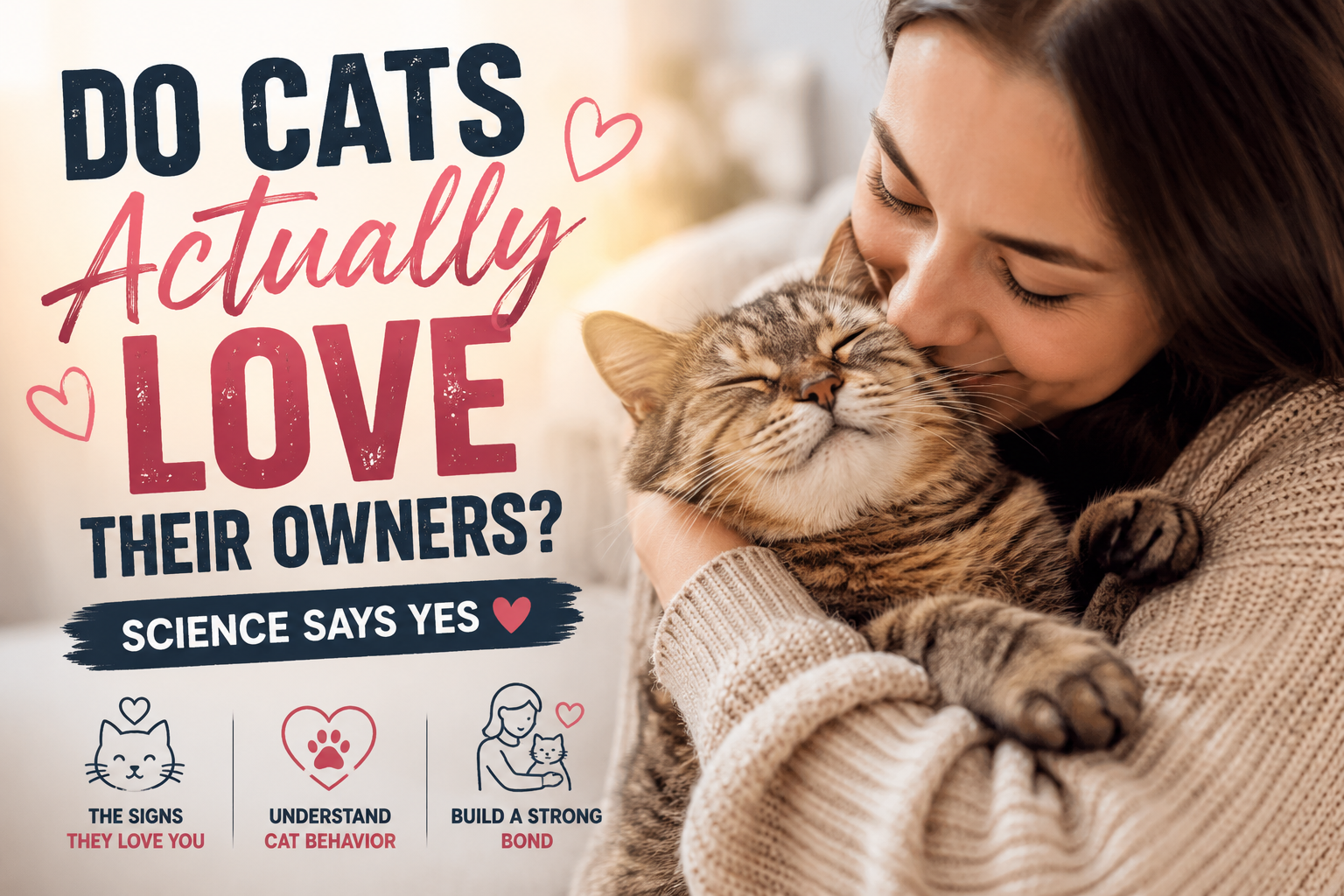
If you’ve ever asked yourself, “Does my cat love me?”, you’re not alone. For years, cats were thought to be distant, independent animals that tolerated humans rather than formed meaningful relationships with them. Modern research tells a different story. Scientists now know that cat love and emotional attachment are real—they’re simply expressed in ways that differ from what many people expect.
Instead of relying on obvious displays of excitement like dogs often do, cats communicate through subtle cat behavior that reflects trust, comfort, and security. Understanding these behaviors can completely change the way you interpret your cat’s actions.
Can Cats Form Emotional Bonds With People?
Yes. Research suggests that cats are capable of developing strong emotional attachments to their owners.
Just like people, every cat has a unique personality. Some openly seek affection, while others prefer quieter interactions. Neither approach means your cat cares more or less—it simply reflects how they communicate.
Cats often build their strongest relationships with people who:
- Respect their personal space
- Follow consistent daily routines
- Respond calmly to their needs
- Spend time playing and interacting with them
- Create a safe, predictable environment
Over time, these positive experiences strengthen bonding with a cat, allowing trust to grow naturally.
How Researchers Measure Feline Affection
Unlike humans, cats can’t tell researchers how they feel. Instead, scientists study their behavior in controlled situations.
Researchers look for signs such as:
- Whether a cat seeks comfort from its owner in unfamiliar environments
- How quickly it relaxes after being reunited with its owner
- Willingness to explore when a trusted person is nearby
- Responses to the owner’s voice compared to a stranger’s
- Preference for spending time close to a familiar caregiver
Many studies have found that cats often use their owners as a “secure base”—someone whose presence makes them feel safe enough to explore new surroundings. This is a strong indicator of genuine cat affection, not merely dependence for food.
What Makes Cat-Human Relationships Different From Dog-Human Bonds?
One of the biggest mistakes people make is judging cats by dog standards.
Dogs were bred over thousands of years to cooperate closely with humans, making their affection highly visible. Cats evolved differently. Their ancestors survived by being cautious and independent, so their emotional signals remain much more subtle.
That doesn’t make a cat’s bond any less meaningful.
Instead of jumping excitedly when you come home, your cat may show affection by:
- Quietly sitting beside you
- Following you from room to room
- Greeting you with a soft chirp
- Sleeping near you because they feel safe
- Rubbing against your legs to share their scent
These small behaviors often reflect deep trust, even if they don’t look dramatic.
Why Understanding Cat Behavior Matters
When you learn how cats naturally communicate, everyday interactions take on new meaning.
Instead of wondering whether your cat is being distant, you begin noticing the quieter signs of connection that often go unnoticed. This understanding helps you:
- Recognize genuine affection instead of overlooking it.
- Build stronger trust through positive interactions.
- Respond appropriately to your cat’s emotional needs.
- Reduce misunderstandings that can damage your relationship.
In many cases, the answer to “Does my cat love me?” isn’t hidden—it’s simply expressed through a language that rewards patience, observation, and understanding. The more you learn about cat behavior, the easier it becomes to recognize the quiet but powerful ways your feline companion shows they care.