

Have you ever caught your cat eating from your dog’s food bowl? Or perhaps you’ve run out of cat food and wondered whether dog food would be a safe alternative for your furry friend.
It’s a common situation, especially in homes with both cats and dogs. But is it actually safe?
Cats can eat a small amount of dog food occasionally without usually experiencing serious problems. However, dog food is not suitable for cats as a regular diet or a replacement for cat food. Cats have different nutritional requirements, and dog food does not provide all the essential nutrients they need to stay healthy.
In this guide, we’ll explain what happens if your cat eats dog food, whether it’s safe for a few days, the differences between wet and dry dog food, possible side effects, and what you can feed your cat when you run out of cat food.
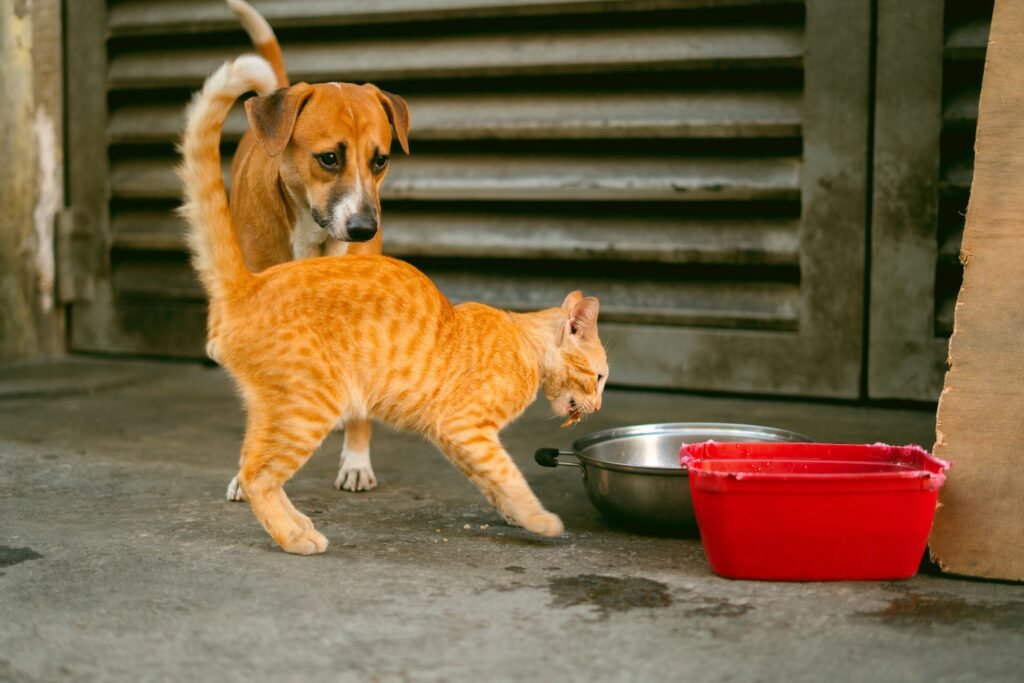
Can Cats Eat Dog Food?
Yes, cats can eat a small amount of dog food occasionally. If your cat steals a few pieces of kibble from your dog’s bowl, there’s generally no reason to panic.
However, cats should not eat dog food regularly or depend on it for their daily nutrition.
Cats are obligate carnivores, meaning they depend on nutrients found in animal-based foods. They have specific nutritional requirements that differ from those of dogs.
For example, cats need certain essential nutrients, including:
- Taurine: An essential amino acid that supports normal heart function, vision, and reproduction.
- Vitamin A: Cats need preformed vitamin A because they cannot efficiently convert plant-based beta-carotene into active vitamin A.
- Arachidonic acid: An essential fatty acid that cats need for normal body functions.
- Arginine: An essential amino acid required for the normal removal of ammonia from the body.
- Higher protein levels: Cats generally require more dietary protein than dogs.
Dog food is formulated to meet canine nutritional requirements, not feline requirements. Therefore, it may not contain sufficient amounts of these essential nutrients for cats.
According to VCA Animal Hospitals, dogs and cats have different nutritional needs, which is why their commercial foods should not be used interchangeably.
Bottom line: A few bites of dog food are usually not dangerous for a healthy cat, but regular consumption can lead to nutritional deficiencies.
Is Dog Food Safe for Cats?
Dog food is not generally considered poisonous to cats. However, there is an important difference between food that is not toxic and food that provides complete nutrition.
A small amount of ordinary commercial dog food is unlikely to cause serious harm to most healthy cats.
The problem begins when dog food becomes a regular part of a cat’s diet.
Most commercial dog foods are designed to meet dogs’ nutritional requirements. They may not provide the right amounts of taurine, protein, vitamins, fatty acids, and other nutrients that cats need.
For example, taurine is particularly important for feline health. Cats cannot produce enough taurine on their own, so they must obtain it through their diet.
Long-term taurine deficiency can contribute to serious health problems, including:
- Dilated cardiomyopathy, a condition affecting the heart muscle.
- Retinal degeneration, which can cause vision problems.
- Reproductive problems.
Therefore, even if your cat enjoys eating dog food, you should always provide a nutritionally complete cat food as its main diet.
What Happens If My Cat Eats Dog Food?
If your cat accidentally eats a small amount of dog food, it will usually be fine.
Most healthy cats can tolerate an occasional bite without developing serious health problems.
However, some cats may experience digestive discomfort, especially if they are not accustomed to eating dog food.
Possible reactions include:
- Vomiting
- Diarrhea
- Mild stomach discomfort
- Changes in appetite
These symptoms are not guaranteed to happen. Some cats may show no noticeable reaction at all.
If your cat eats a large amount, develops repeated vomiting or diarrhea, becomes unusually tired, or refuses food, contact your veterinarian.
You should also check the dog food packaging for its ingredients. If the food contains an unusual ingredient or you suspect your cat has eaten something potentially toxic, seek veterinary advice.
Remember: An occasional accidental bite is very different from feeding dog food as your cat’s main diet.
Can Cats Temporarily Eat Dog Food?
Cats can usually tolerate a small amount of ordinary dog food on a one-time basis. However, temporarily eating dog food should not become a feeding plan.
The nutritional requirements of cats are different from those of dogs. Dog food is not formulated to provide all the nutrients cats need for healthy growth and normal body functions.
If you’ve run out of cat food, try to arrange a suitable alternative rather than relying on dog food for several meals.
Can Cats Eat Dog Food for a Couple of Days?
Feeding dog food for a couple of days is not something you should consider safe or recommend as a routine solution.
A healthy adult cat may tolerate a small amount of dog food without immediate problems, but that does not mean dog food provides adequate nutrition over several days.
If you have no cat food available, offer an appropriate temporary alternative, such as plain, thoroughly cooked, boneless chicken.
This is also not a complete or balanced long-term diet.
Get proper cat food as soon as possible and contact your veterinarian if your cat has special dietary needs.
Can Cats Eat Dog Food for 2 Days?
It is better not to plan on feeding dog food for two consecutive days.
Even though nutritional deficiencies generally develop with inadequate feeding over time rather than from a single meal, dog food does not provide a reliable nutritional balance for cats.
Instead, look for a temporary cat-safe food option and return to complete and balanced cat food as quickly as possible.
Can Cats Eat Dog Food for a Week?
No. You should not feed your cat dog food for an entire week.
Dog food is not formulated to meet a cat’s nutritional requirements. Depending on the particular food, regular consumption may leave your cat short of essential nutrients.
A week of dog food should not be treated as a safe emergency feeding strategy.
If you cannot obtain cat food, contact a veterinarian for advice about an appropriate temporary feeding plan.
Can Cats Eat Different Types of Dog Food?
Dog food comes in several forms, including dry kibble, wet food, and different formulas designed for puppies or adult dogs.
But does changing the type of dog food make it safer for cats?
Let’s look at the differences.
Can Cats Eat Dry Dog Food?
A healthy cat can usually eat a few pieces of ordinary dry dog food without serious consequences.
However, dry dog food is not a suitable replacement for dry cat food.
The main issue is nutritional composition, not simply whether the food is dry or wet.
Dry dog food may not provide enough taurine, protein, and other nutrients required by cats.
If your cat regularly steals kibble from your dog’s bowl, try feeding both pets separately.
Can Cats Eat Wet Dog Food Occasionally?
Cats can generally tolerate a small amount of ordinary wet dog food occasionally.
However, wet dog food is not nutritionally equivalent to wet cat food.
Both products may contain meat, animal proteins, and moisture, but their nutritional formulations are different.
Wet dog food may not provide the essential nutrients your cat needs in sufficient quantities.
So, although an occasional small taste is unlikely to cause serious problems, you should not use wet dog food as a regular meal replacement.
Can Cats Eat Dog Food Mixed With Cat Food?
Mixing dog food with cat food does not automatically make dog food nutritionally suitable for cats.
For example, adding a few pieces of dog kibble to your cat’s regular food does not guarantee that the meal will contain the correct balance of essential nutrients.
If your cat accidentally eats a little mixed food, there is generally no reason to panic.
However, avoid making this a regular feeding habit.
The best option is to feed your cat a complete and balanced cat food appropriate for its age and health condition.
What Are the Side Effects of Cats Eating Dog Food?
The side effects of cats eating dog food depend on how much they consume, how often they eat it, and their individual health.
A small accidental amount may cause no noticeable problems.
However, regular consumption can create nutritional problems because dog food does not meet all feline dietary requirements.
Here are some potential concerns.
1. Taurine Deficiency
Taurine is an essential amino acid that cats must obtain from their diet.
It supports several important functions, including normal heart function, vision, and reproduction.
Some dog foods may contain taurine, but they are not necessarily formulated to meet a cat’s specific taurine requirements.
Long-term inadequate taurine intake can contribute to dilated cardiomyopathy and retinal degeneration.
2. Digestive Problems
A sudden change in diet can upset your cat’s digestive system.
Some cats may experience:
- Vomiting
- Loose stools
- Diarrhea
- Mild stomach discomfort
These symptoms may occur after eating unfamiliar food, although not every cat will experience them.
3. Nutritional Deficiencies
Dog food may not contain sufficient amounts of several nutrients required by cats.
For example, cats need appropriate amounts of preformed vitamin A, arachidonic acid, taurine, and certain amino acids.
A prolonged diet that does not meet these requirements can affect normal body functions and overall health.
4. Heart and Vision Problems
Long-term taurine deficiency is particularly concerning because it can affect the heart and eyes.
Two important conditions associated with taurine deficiency are:
- Dilated cardiomyopathy: A disease in which the heart muscle becomes weakened and enlarged, affecting its ability to pump blood properly.
- Retinal degeneration: Damage to the retina that can lead to impaired vision and potentially blindness.
These are not expected consequences of one accidental dog-food meal. They are concerns associated with inadequate taurine intake over time.
What Can I Feed My Cat If I Don’t Have Cat Food?
Running out of cat food can be stressful, especially when you cannot visit a pet store immediately.
Fortunately, there are a few temporary food options you may be able to offer a healthy adult cat.
However, remember that these foods are not complete and balanced replacements for commercial cat food.
1. Plain Cooked Chicken
Plain, thoroughly cooked chicken is one possible temporary option.
Make sure it is:
- Fully cooked.
- Boneless and skinless.
- Free from salt and seasoning.
- Prepared without onion or garlic.
- Cut into small, manageable pieces.
Avoid fried chicken, spicy chicken, and seasoned leftovers.
2. Plain Cooked Egg
A small amount of thoroughly cooked egg can provide protein.
You can offer a little plain scrambled or boiled egg.
Do not add butter, salt, spices, onions, or other seasonings.
Avoid raw eggs.
3. Plain Cooked Fish
A small amount of thoroughly cooked, boneless fish may also be an occasional option.
Make sure the fish is plain and contains no added salt, spices, garlic, or onion.
Remove all bones carefully before serving.
What Foods Should You Avoid?
Some common household foods are not appropriate for cats.
Avoid giving your cat:
- Chocolate
- Onions and garlic
- Alcohol
- Raw meat and raw fish
- Raw eggs
- Foods containing excessive salt or seasoning
- Cooked bones
- Milk, which can cause digestive problems in many cats
Always provide fresh, clean drinking water.
Important: Plain chicken, eggs, and fish are temporary options, not nutritionally complete cat diets. Your cat needs properly formulated cat food for its regular meals.
Also, if your cat refuses to eat, do not simply keep changing foods or force-feed it. Contact your veterinarian. Cornell University College of Veterinary Medicine warns that sustained appetite loss can become serious in cats, sometimes within 24 hours.
Why Is Dog Food Not Suitable for Cats?
You might wonder why cats and dogs cannot simply share the same food when both animals eat meat-based products.
The answer is their different nutritional requirements.
Cats are obligate carnivores, while dogs have more dietary flexibility.
Although both animals need protein, fats, vitamins, and minerals, the required amounts and sources are not always the same.
Here are some important differences.
Taurine Requirements
Cats require dietary taurine, while dogs can generally produce enough taurine from other nutrients under normal conditions.
Dog food is not necessarily formulated to provide sufficient taurine for cats.
Protein Requirements
Cats generally require higher levels of dietary protein than dogs.
They also rely more heavily on protein for energy metabolism.
Vitamin A Requirements
Cats need preformed vitamin A from animal-based sources.
Dogs can convert beta-carotene into active vitamin A, but cats cannot perform this conversion efficiently.
Arachidonic Acid Requirements
Cats require dietary arachidonic acid, an essential fatty acid that dogs can generally synthesize from other fatty acids.
These differences explain why commercial dog food should not replace a complete and balanced cat diet.
What Is the Difference Between Cat Food and Dog Food?
Although cat food and dog food may look similar, their nutritional formulations are different.
Here is a simple comparison:
| Nutritional requirement | Cats | Dogs |
|---|---|---|
| Diet classification | Obligate carnivores | Omnivorous dietary flexibility |
| Protein requirement | Generally higher | Generally lower |
| Taurine | Must obtain from diet | Can generally synthesize enough |
| Vitamin A | Needs preformed vitamin A | Can convert beta-carotene |
| Arachidonic acid | Dietary requirement | Can generally synthesize it |
| Food formulation | Designed for cats | Designed for dogs |
These are general nutritional differences, not exact feeding recommendations. Individual requirements vary according to age, health, activity, and life stage.
When purchasing food, check that the packaging identifies it as complete and balanced for cats and the appropriate life stage.
When Should You Contact a Veterinarian?
If your cat has eaten a small amount of ordinary dog food and is behaving normally, you generally do not need to panic.
However, some situations require veterinary attention.
Contact your veterinarian if:
- Your cat experiences repeated vomiting or diarrhea.
- Your cat becomes unusually weak or lethargic.
- Your cat refuses to eat.
- Your cat shows signs of abdominal discomfort.
- Your cat has an existing medical condition or special dietary requirements.
- Your cat has been eating dog food regularly instead of complete cat food.
Pay particular attention to appetite changes.
According to Cornell University College of Veterinary Medicine, a sustained loss of appetite can seriously affect an adult cat’s health in as little as 24 hours. Very young kittens are at even greater risk.
Do not wait for severe symptoms before seeking advice if your cat stops eating.
Frequently Asked Questions
Can cats eat dog food once?
Yes. A small amount of ordinary commercial dog food eaten once is unlikely to cause serious problems in a healthy cat. However, it should not become a regular meal.
Can cats eat dog food every day?
No. Dog food does not provide all the nutrients cats need in the correct amounts. Feeding it every day instead of complete cat food can lead to nutritional deficiencies.
Can cats eat puppy food?
Puppy food is designed to meet the nutritional requirements of growing dogs, not cats. It should not be used as a replacement for kitten or adult cat food.
Is wet dog food better than dry dog food for cats?
Neither is a suitable regular replacement for cat food. Both wet and dry dog food are formulated for dogs and may not provide the nutrients cats require.
Can cats eat dog treats?
It is better to avoid giving dog treats to cats unless you have checked the ingredients and confirmed their suitability with your veterinarian. Some treats may contain ingredients or additives that are unsuitable for cats.
Can dog food make cats sick?
A small amount of ordinary dog food usually does not make a healthy cat seriously ill. However, sudden dietary changes can cause digestive upset, while long-term feeding can result in nutritional deficiencies.
Can cats survive on dog food?
Dog food is not a nutritionally complete diet for cats. Although a cat may initially appear healthy while eating it, prolonged feeding can lead to serious nutritional problems.
Do not use dog food as your cat’s main diet.
Final Thoughts
So, can cats eat dog food?
Yes, a small accidental bite or occasional taste of ordinary dog food is generally not a reason to panic. However, dog food should never replace a properly balanced cat diet.
Cats have unique nutritional requirements, including taurine, preformed vitamin A, arachidonic acid, and higher dietary protein needs.
If you run out of cat food, consider a suitable temporary alternative and arrange proper cat food as soon as possible.
Most importantly, keep your cat’s regular meals complete, balanced, and appropriate for its age and health.
Your cat may love stealing food from your dog’s bowl, but that doesn’t mean the food is right for them!